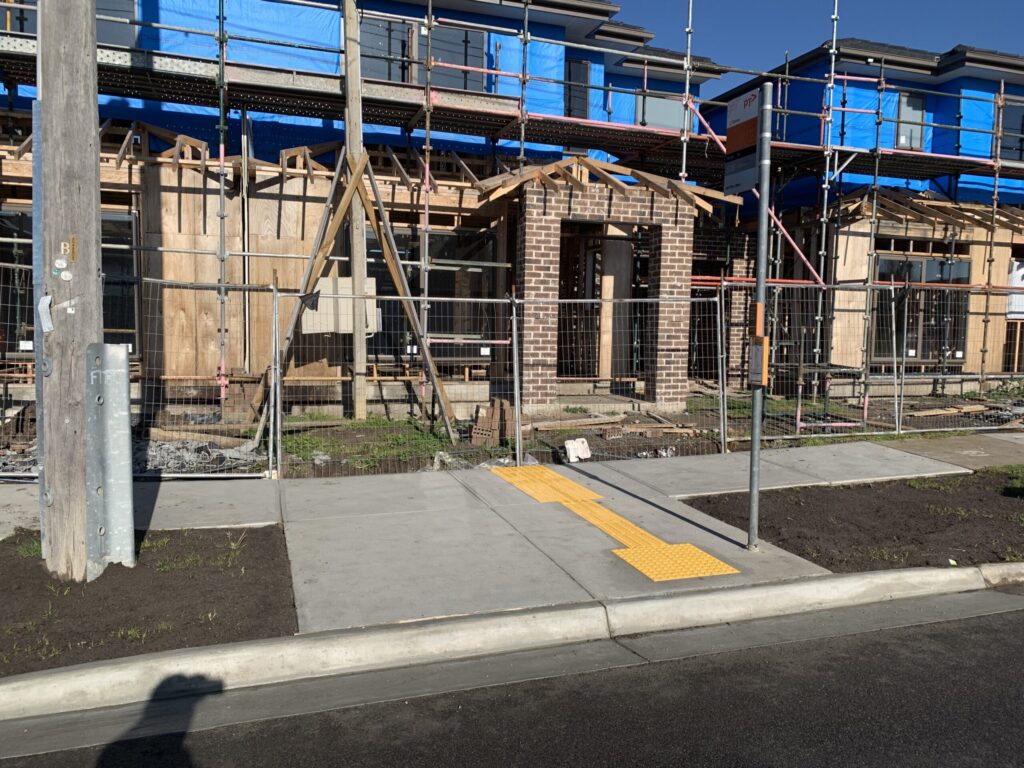
WHY CHOOSE US FOR BUS STOP DESIGN IN MELBOURNE?

One-Stop Service
Complete bus stop design and installation in Melbourne, covering assessments, drawings, engineering, and on-site works under one coordinated team.

Custom Design Options
Site-specific layouts, shelter designs, and accessibility zones tailored to local conditions and project requirements.

DDA-Compliant Designs
DDA bus stop design with compliant gradients, access zones, tactile indicators, seating layout, and circulation areas meeting Victorian accessibility standards.

Skilled Team
Experienced engineers, designers, and site crews delivering bus stop design, upgrades, and installation across public and commercial projects.

Cost-Focused Planning
Clear, compliant designs that minimise rework and control construction costs and timelines.
OVERVIEW – BUS STOP DESIGN SERVICES MELBOURNE
Infra Projects delivers specialised bus stop design services in Melbourne, supporting new builds, upgrades, and compliance-focused improvements across public and private sites. Our team handles every aspect of bus stop design Melbourne, including bus shelter design, DDA bus stop design, bus stop installation, and detailed bus stop layout design for councils, developers, and transport contractors.
All design work follows the required Victorian transport standards, including:
- Public Transport Victoria (PTV) Guidelines for stop placement, signage, and shelter types
- Disability Discrimination Act (DDA) requirements for accessibility
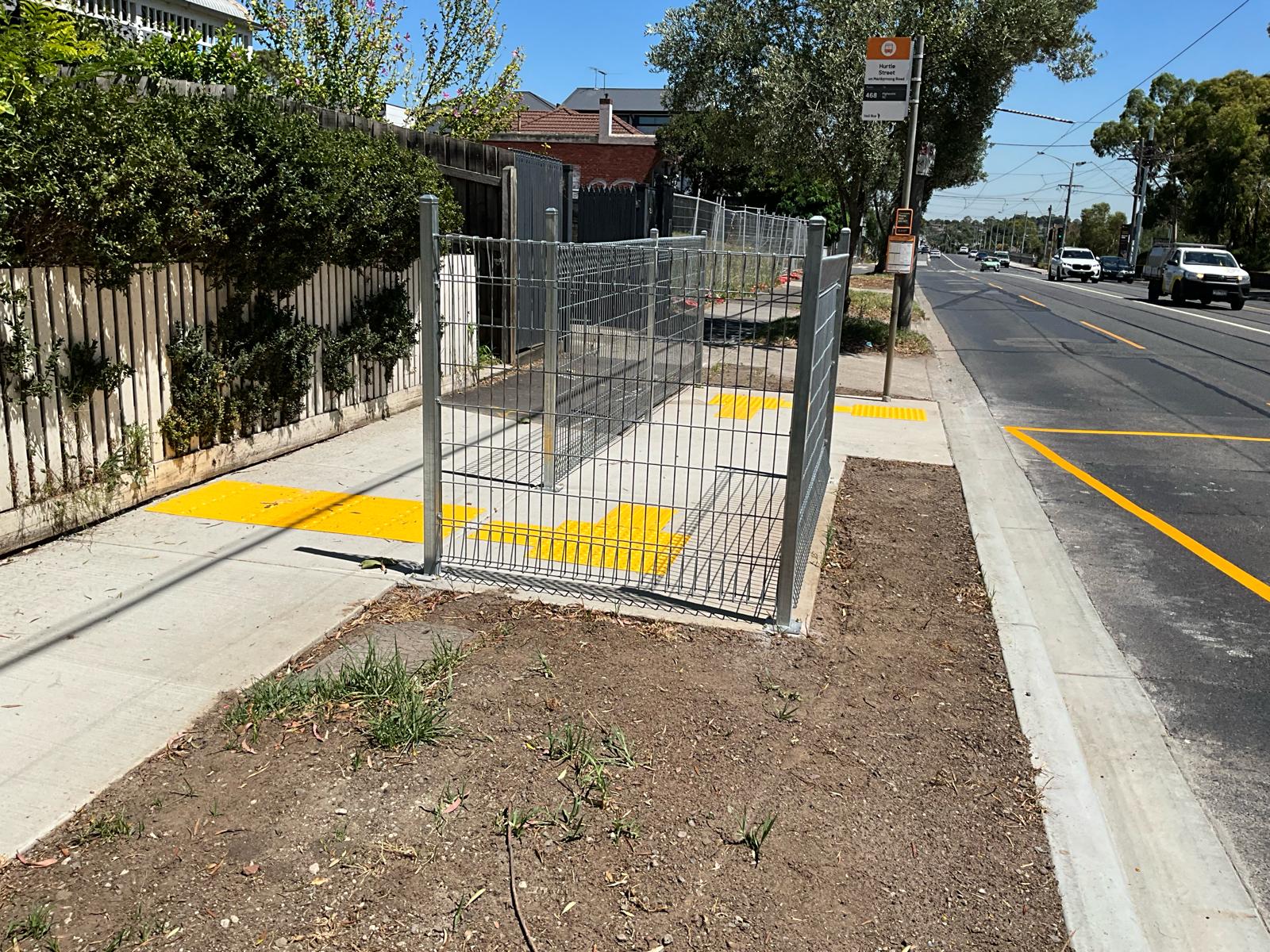
- Transport Standards under the DDA for boarding points, gradients, and tactile indicators
- Austroads recommendations for pedestrian safety and road environment integration
- Local council requirements for civil works, footpaths, kerbing, and approvals
- Road safety standards ensuring clear sightlines for approaching buses and pedestrians
Our approach ensures each bus stop design is safe, accessible, and compliant, with layouts suited to urban, suburban, and high-traffic environments across Melbourne.
Civil Design and Constructability
Technical civil engineering elements affecting installation:
- Concrete Pad Specification: Thickness, reinforcement, and finish designed per state and local government requirements.
- Kerb Works: Reconstruction or raising kerb for compliant height.
- Footpath Works: Widening or reconstruction to achieve a minimum 1.5 m accessible path within DDA-compliant grading ranges.
- Service Locations: Identification and avoidance of underground utilities before excavation.
Operational Layout & Passenger Flow
Layout planning must optimise safety and user movement:
- Shelter Setback: Positioned to maintain a clear pedestrian path behind the boarding point.
- Seating Placement: Avoids blocking the accessible path or TGSI lines.
- Signage Visibility: Placed within direct sight of approaching bus drivers.
- Queue Areas: Space allocated for passengers to wait without obstructing footpaths.
Compliance Documentation
Each project includes:
- DDA Compliance Checklist: Confirms all accessibility requirements for gradients, access paths, boarding areas, and tactile indicators.
- PTV Layout Requirements: Layouts prepared in accordance with Public Transport Victoria standards for stop location, signage, shelters, and passenger access.
- Engineering Drawings: Prepared to align with traffic requirements and council and service authority conditions for utilities, access, and approvals.
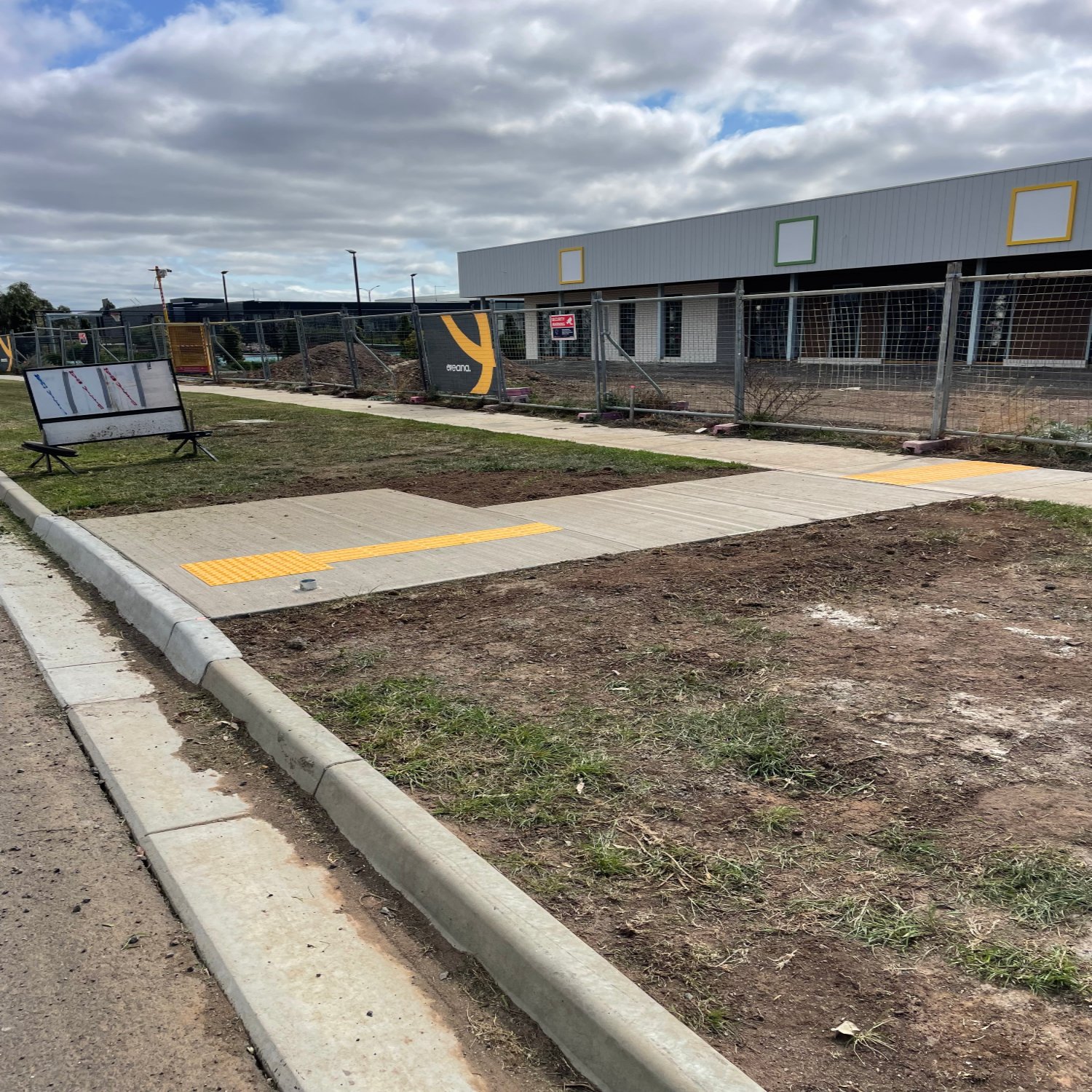
- TGSI Layout Plan: Drawings showing compliant placement, offsets, and orientation of tactile indicators.
- Concrete and Footing Specifications: Details defining slab thickness, reinforcement, and shelter footing design.
- Council Submission Package: Complete drawing and documentation set prepared for council review and approval.
TYPES OF BUS STOP DESIGNS WE DELIVER
Infra Projects provides a complete range of bus stop design solutions in Melbourne, covering standard stop layouts, custom shelters, and DDA-compliant configurations.
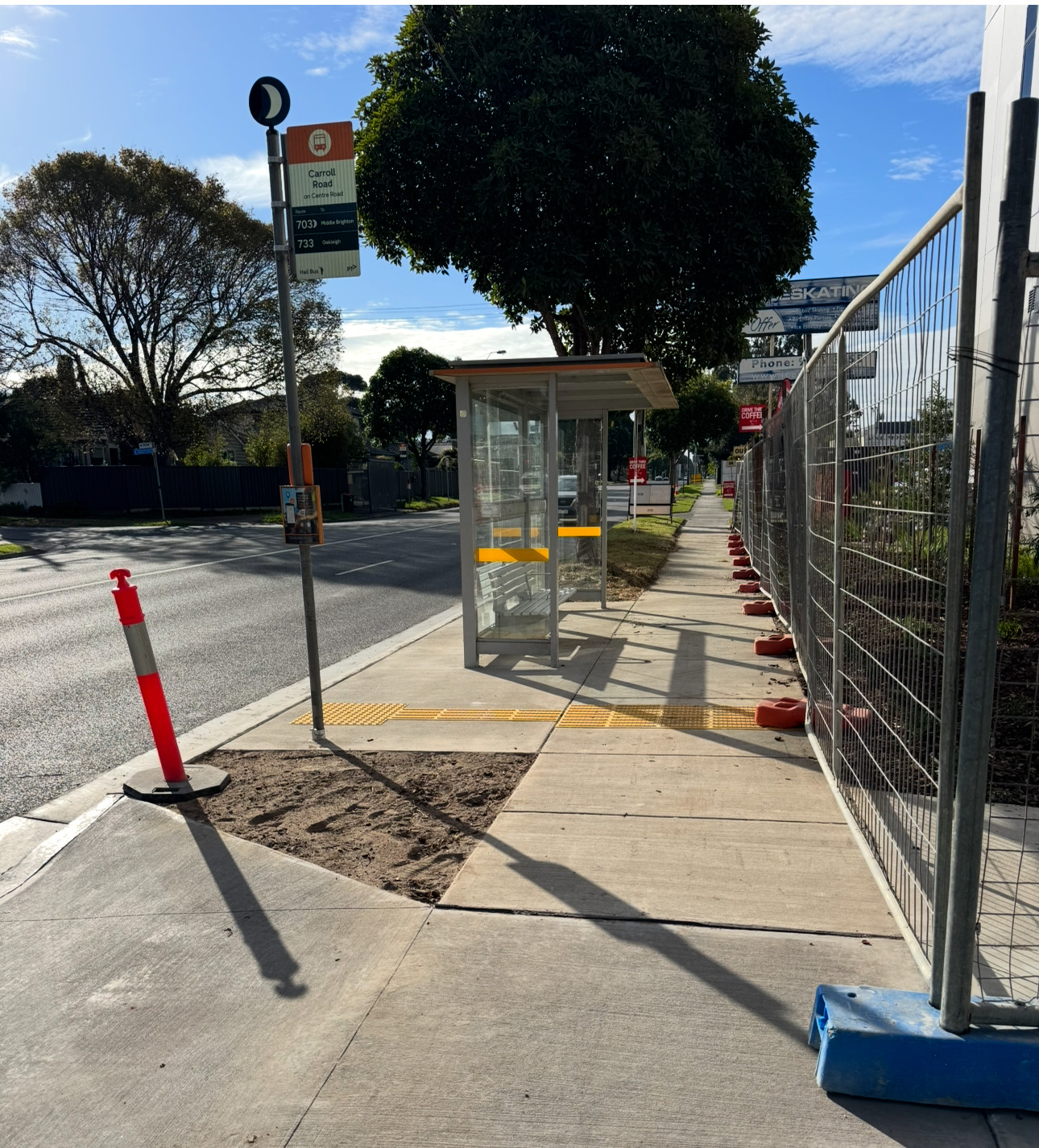
Standard Bus Stop Layouts
Designed for everyday public transport sites across Melbourne.
- Urban road bus stops
- Indented bus stop
- Rural bus stops
- Adjacent driveway bus stop
- School bus stop
- Kerb side bus stop
These layouts include boarding points, signage placement, clear zones, and compliant passenger paths.
Custom Bus Stop Layout Design Melbourne
Developed for sites with special conditions or operational requirements.
- Footpath widening or reconstruction
- Kerbline reformation for correct vehicle alignment
- Bespoke shelter orientation based on road geometry
- Seating layout options and accessible waiting zones
- TGSI layouts aligned with DDA rules
- Placement of bins, bollards, lighting, and signage
- Integration with cycle lanes, shared paths, and verge constraints
This option is ideal for sites with limited space, curved roads, high foot traffic, or council-specific design rules.
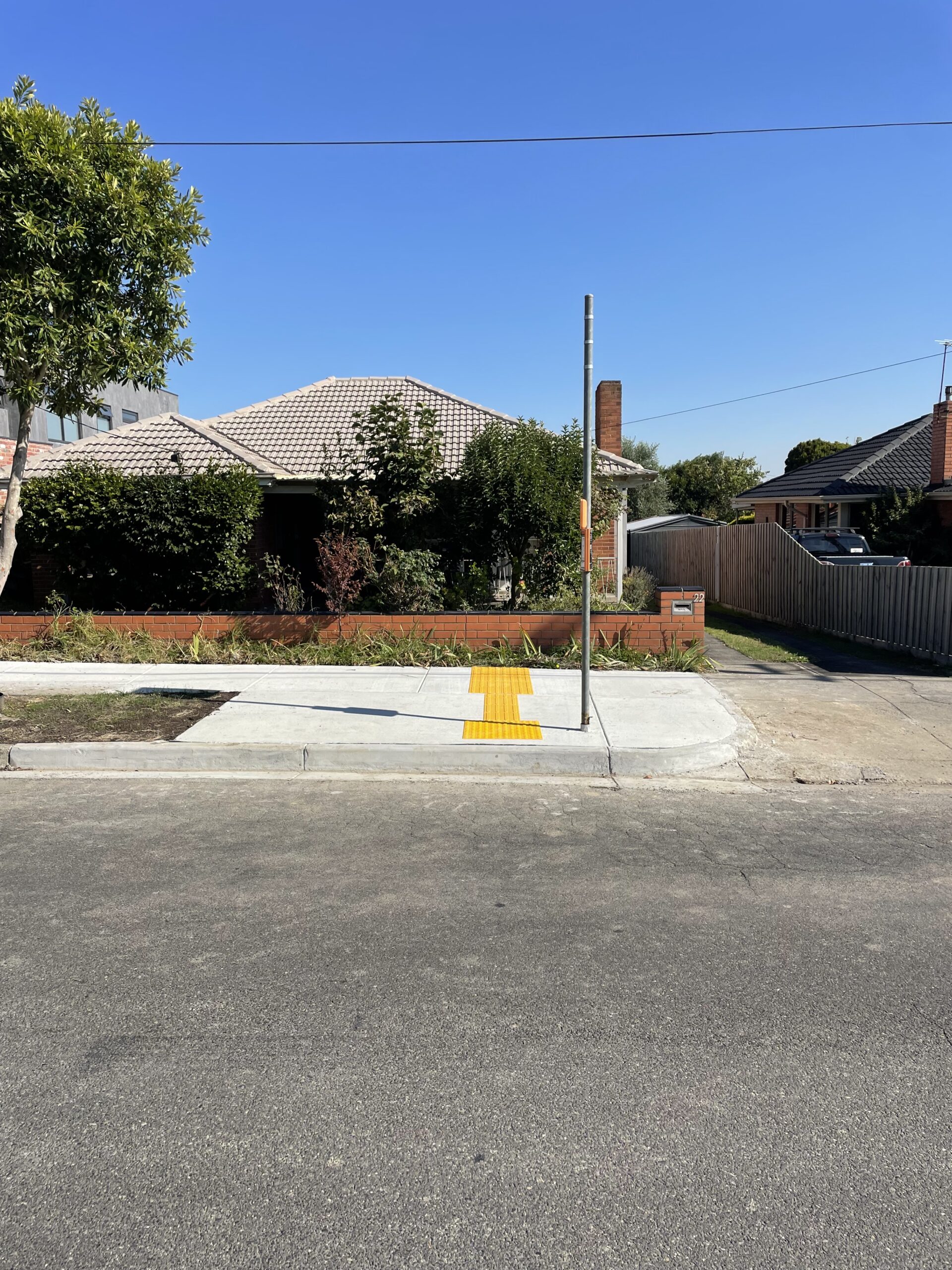
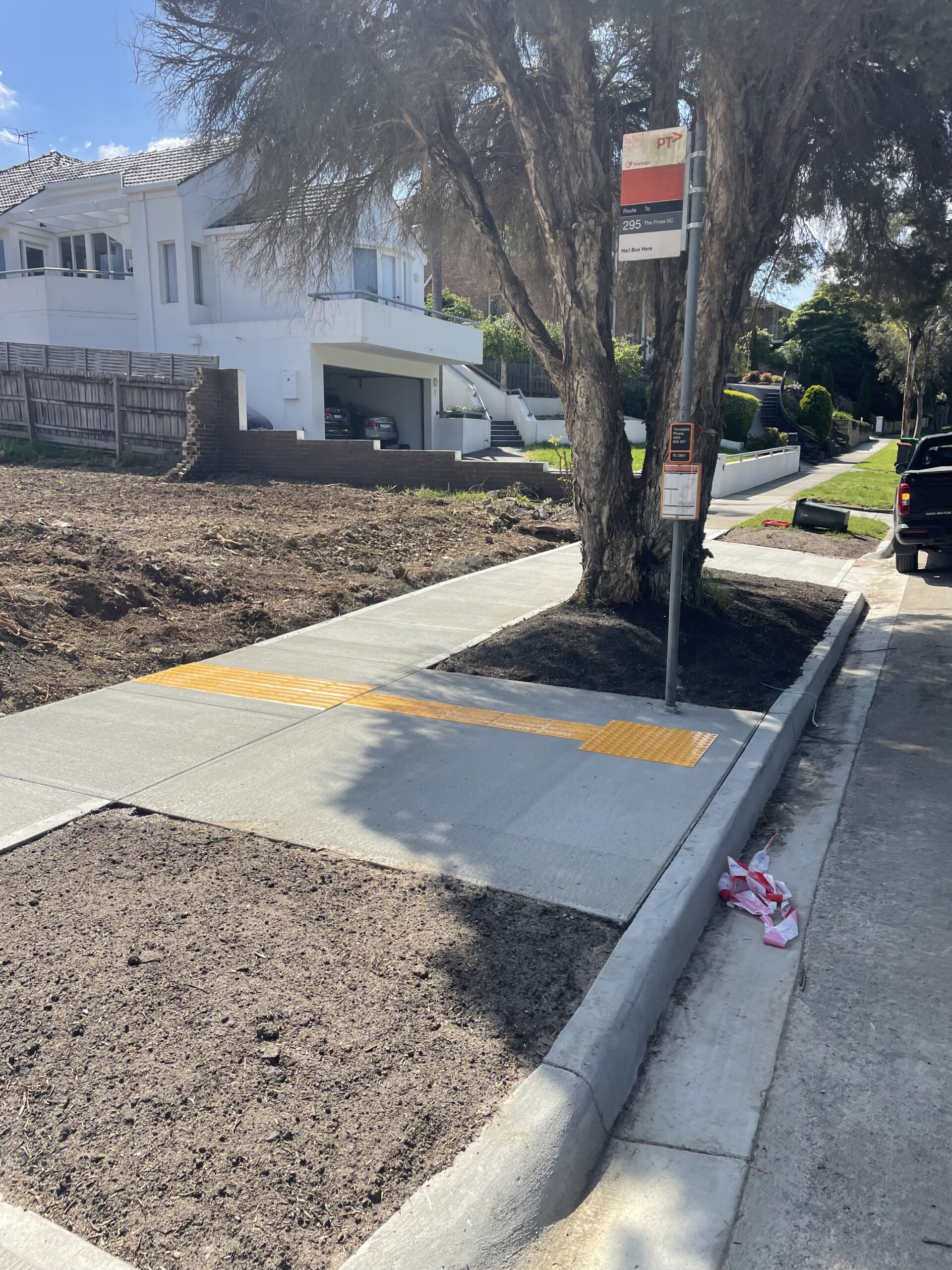
Major Stop Upgrades & Compliance Projects
For older stops requiring renewal or accessibility improvement.
- DDA boarding pad upgrades
- Kerb raising
- New concrete pads and footpath works
- Replacement of outdated shelters
- Addition of signage or tactile indicators
- Drainage corrections to prevent water pooling
These upgrades ensure existing stops meet modern safety and accessibility standards.
FULL-SERVICE BUS STOP DESIGN & INSTALLATION
Site Survey and Assessment
- Level and gradient checks: Measures surface slope for DDA boarding compliance.
- Crossfall measurement: Confirms crossfall stays within acceptable tolerance.
- Footpath width assessment: Ensures a minimum 1.5 m clear access zone.
- Utility and service locations: Identifies underground assets before excavation.
- Existing kerb condition: Assesses height and structural integrity for boarding.
- Drainage review: Checks for water pooling risks affecting boarding areas.
- Sightline and road safety analysis: Verifies driver visibility and pedestrian safety.
- Photographic documentation: Records existing conditions for design reference.
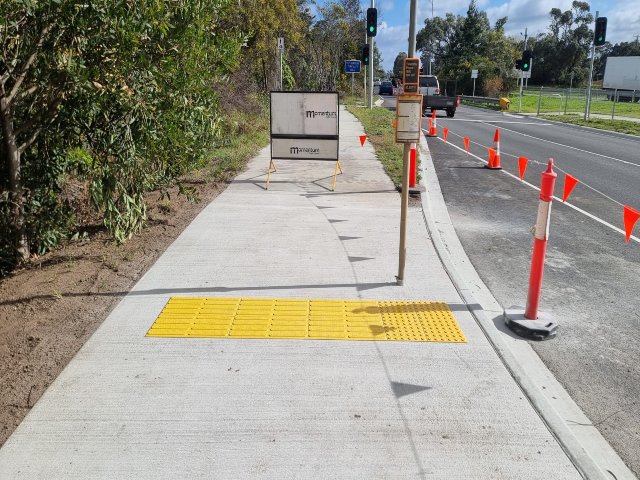
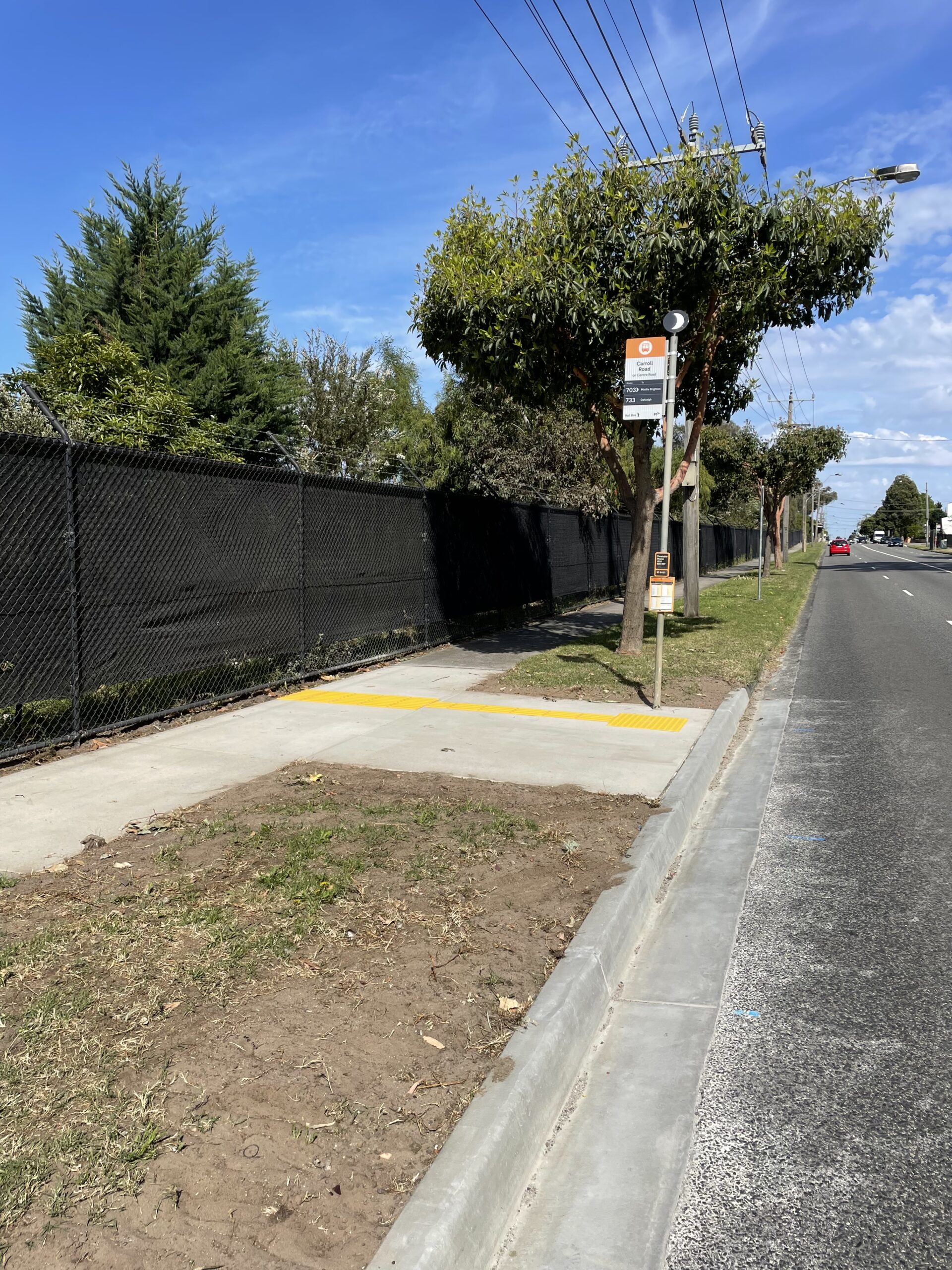
Concept Layout and Technical Design
- Bus stop layout design Melbourne: Creates compliant stop geometry and access layout.
- Shelter placement and orientation: Position the shelter to avoid obstructing pedestrian flow.
- Boarding point dimensions: Specifies DDA-compliant boarding platform size.
- Kerb interface planning: Aligns kerb height for low-floor bus boarding.
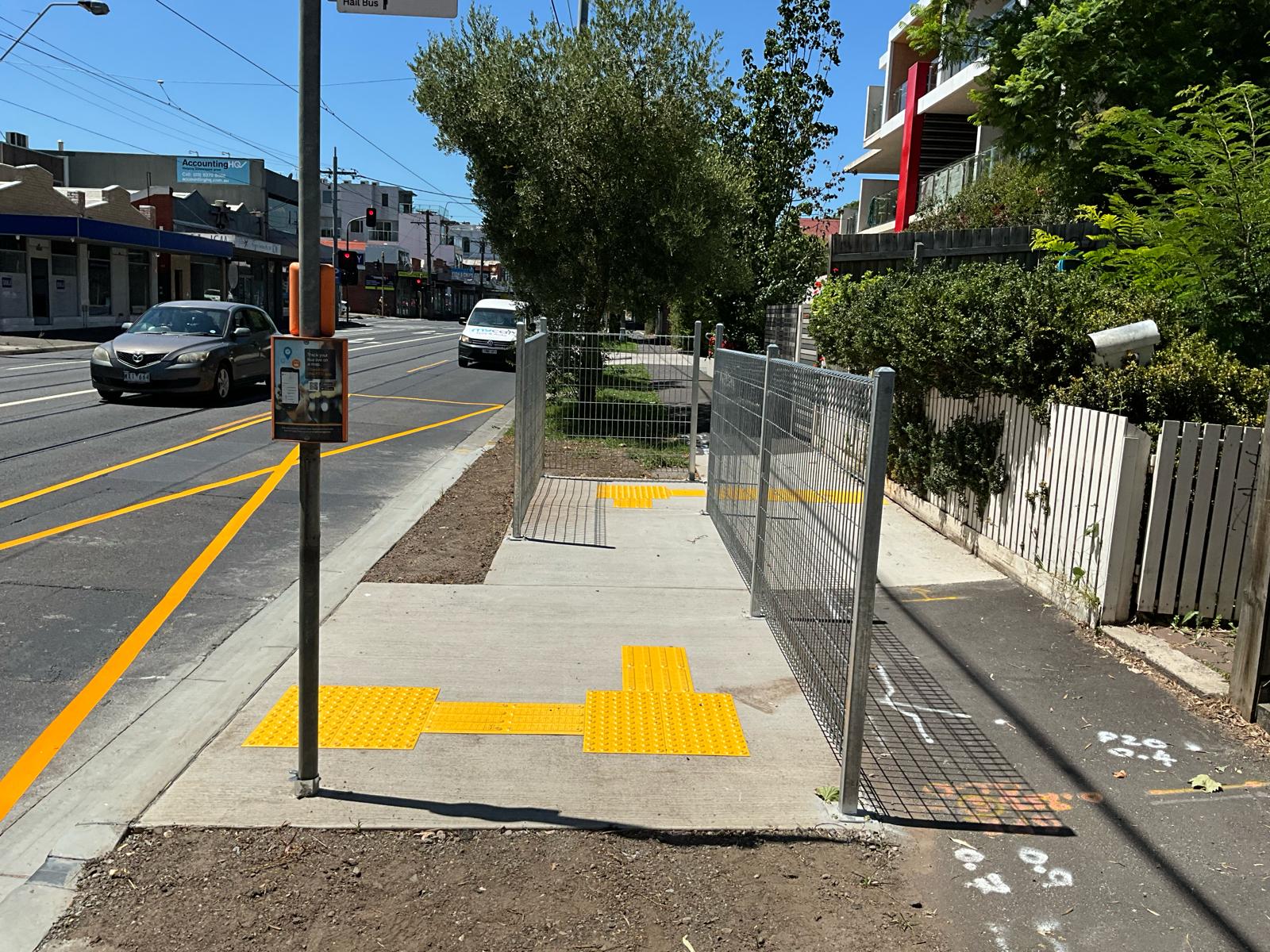
- TGSI layout: Details tactile indicators for safe passenger guidance.
- Clear zone and pedestrian path design: Maintains unobstructed movement routes.
- Seating and pole placement: Position elements to avoid blocking access paths.
- Road safety compliance: Ensures clear sightlines for approaching buses.
Engineering and Documentation
- Concrete pad specifications: Defines thickness, reinforcement, and surface finish.
- Structural details for bus shelters: Includes footing, frame loads, and material specs.
- Footing and base plate designs: Ensure shelter stability under wind loads.
- PTV/DTP drawing templates: Format layouts per Department of Transport and Planning requirements.
- Austroads-based road geometry notes: Aligns design with recognised road standards.
- DDA compliance checklist: Confirms all accessibility rules are met.
- TGSI plan: Shows exact placement and offsets for tactile indicators.
- Drainage and kerb upgrade details: Addresses compliance issues affecting drainage.
- Construction-ready drawings for installers: Provides installers with clear build instructions.

BUS STOP DESIGN MELBOURNE COST
Understanding the cost of a bus stop project requires examining the technical elements that influence design, engineering, and installation. Infra Projects prepares accurate estimates based on shelter specifications, site constraints, and the level of civil work required. The details below outline the key contributors to the project cost for bus stop design services in Melbourne.
Cost Factors
- Shelter Type and Material: Shelter pricing depends on the frame material (steel or aluminium), panel selection (polycarbonate, toughened glass, aluminium cladding), structural thickness,anti-corrosion coatings, and hardware specifications. Higher wind-load zones or vandal-prone locations may require stronger frames and heavier-duty panels, which increase costs.
- Concrete Pad Size: Concrete works form a significant part of the project budget. Larger DDA-compliant boarding pads, extended footpaths, or platform-style slabs require additional excavation, reinforcement mesh, formwork, and finishing. Upgrading an existing pad also adds removal and disposal costs.
- Kerb Upgrade or Installation: A compliant bus stop typically requires a kerb height of approximately 150 mm for low-floor buses. Achieving this may involve full kerb reconstruction, partial height adjustments, or alignment corrections. Kerb works also influence drainage and footpath interface levels, adding to the overall cost.
- Drainage Modifications: If the site has poor fall or pooling issues, adjustments may be necessary. This can include adding pits, creating crossfall to direct water away from the boarding point, adjusting kerb profiles, or regrading the pad and footpath. Drainage upgrades ensure compliance with DDA surface requirements.
- Site Access and Working Hours: Difficult access—such as on narrow verges, high-speed roads, school zones, or locations with heavy pedestrian traffic—may require additional machinery, labour, or restricted working hours. Night works or weekend work also increase labour rates due to safety and scheduling requirements.
- Traffic Management Needs: Many bus stop sites require temporary traffic control. Lane closures, pedestrian detours, spotters, signage boards, and certified controllers can significantly affect project cost depending on road classification and peak traffic periods.
- DDA Compliance Upgrades: Older stops often require substantial adjustment to meet current accessibility standards. This may include pad reconstruction to correct gradients, kerb adjustments, new tactile indicators, footpath widening, or repositioning shelters to maintain clear access widths. Compliance work varies widely between sites and is a major cost factor.
Typical Price Structure
- Design Documentation: Includes site assessment, layout preparation, DDA checks, kerb and boarding pad detailing, TGSI layouts, engineering notes, and preparation of council and PTV submission drawings. Documentation is prepared to suit site conditions and approval requirements.
INDUSTRIES & CLIENTS
Infra Projects supports a wide range of organisations involved in transport infrastructure, land development, and public-access environments. Our bus stop design services in Melbourne are used by councils, commercial property owners, contractors, and institutions that require compliant passenger facilities.
- Local Councils: Design and installation of new stops, accessibility upgrades, shelter replacements, and compliance works across municipal road networks.
- Property Developers: Bus stop layouts are integrated into subdivisions, estates, and mixed-use developments to meet planning permit conditions and transport authority standards.
- Transport and Civil Contractors: Technical design packages, installation support, and DDA upgrades for contractors delivering road, transport corridor, and streetscape projects.
- Shopping Centres and Retail Precincts: Custom shelter placement, access path upgrades, and signage solutions for high-traffic commercial locations.
- Schools and Universities: Safe passenger zones, compliant boarding points, and shelter designs suited for student movement and peak-hour demand.
- Hospitals and Medical Precincts: Accessible bus stop layouts with clear paths, level boarding areas, lighting provisions, and compliant seating configurations.
- Business Parks and Industrial Estates: Durable shelter designs and compliant layouts supporting worker transport access within large precincts.
- Aged-Care and Community Facilities:DDA-focused bus stop design with correct gradients, tactile indicators, and clear access routes for mobility-assisted users.
OUR PROJECTS
COMMERCIAL
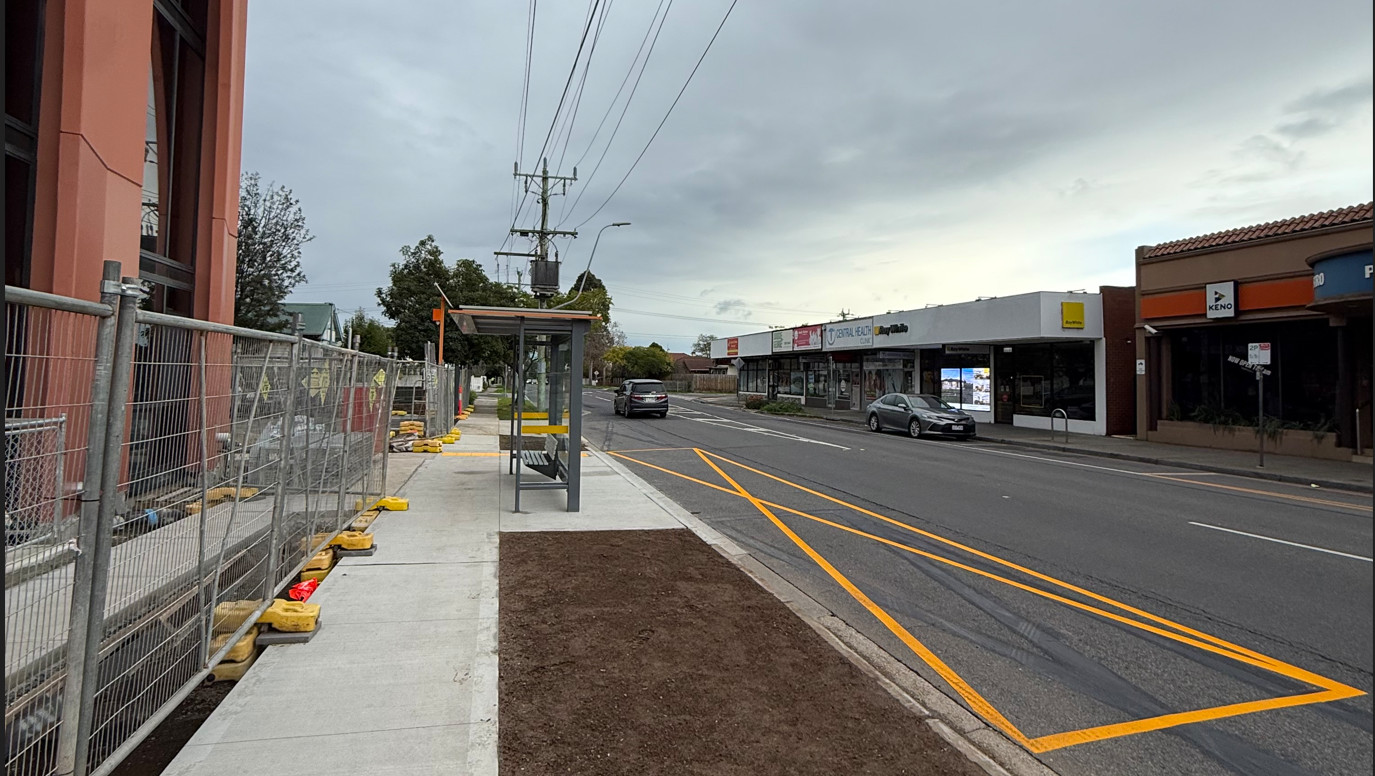
Sunshine
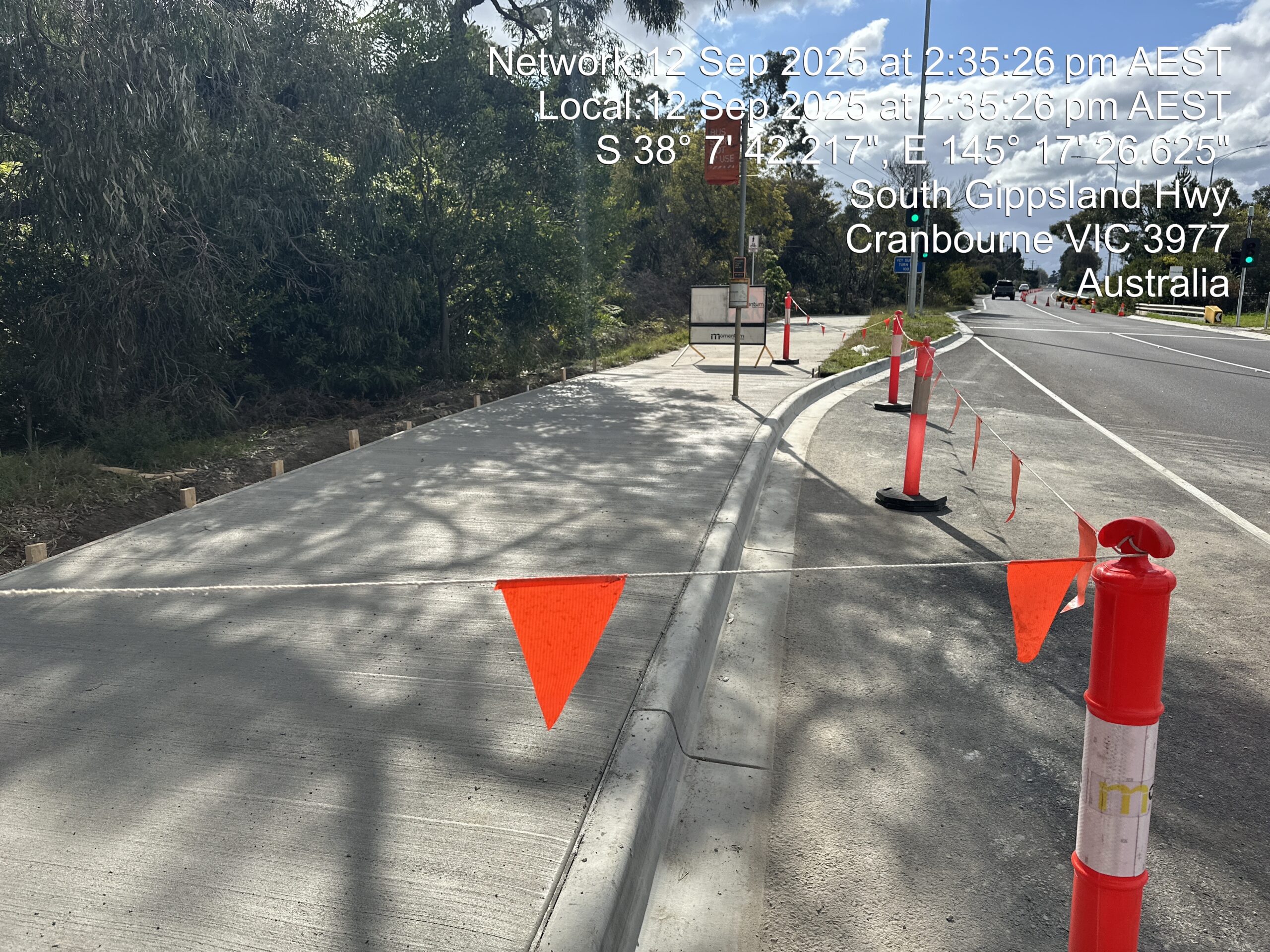
Ballarto Rd, South Gippsland Hwy
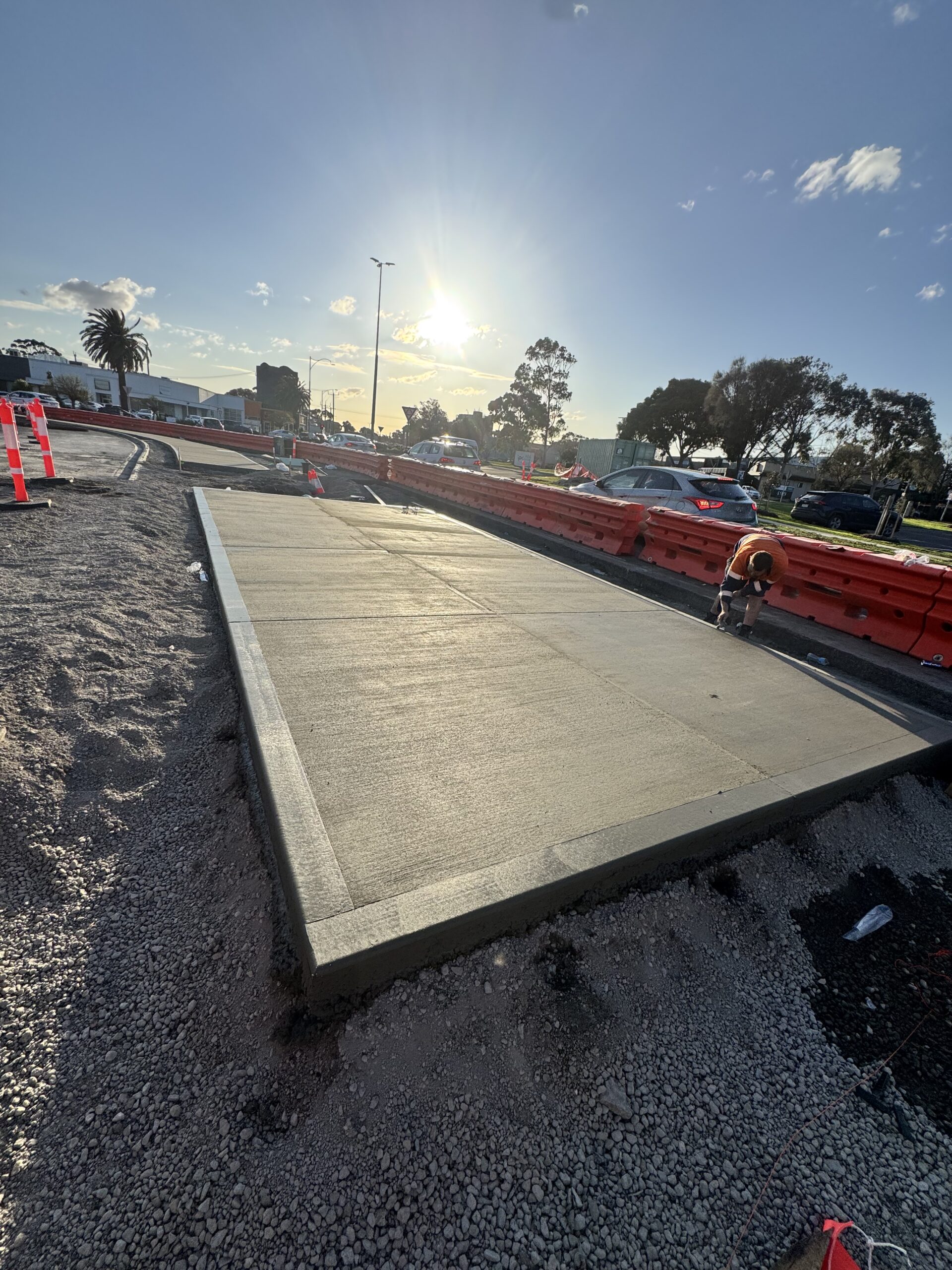
Foundry Rd, Sunshine bus stop
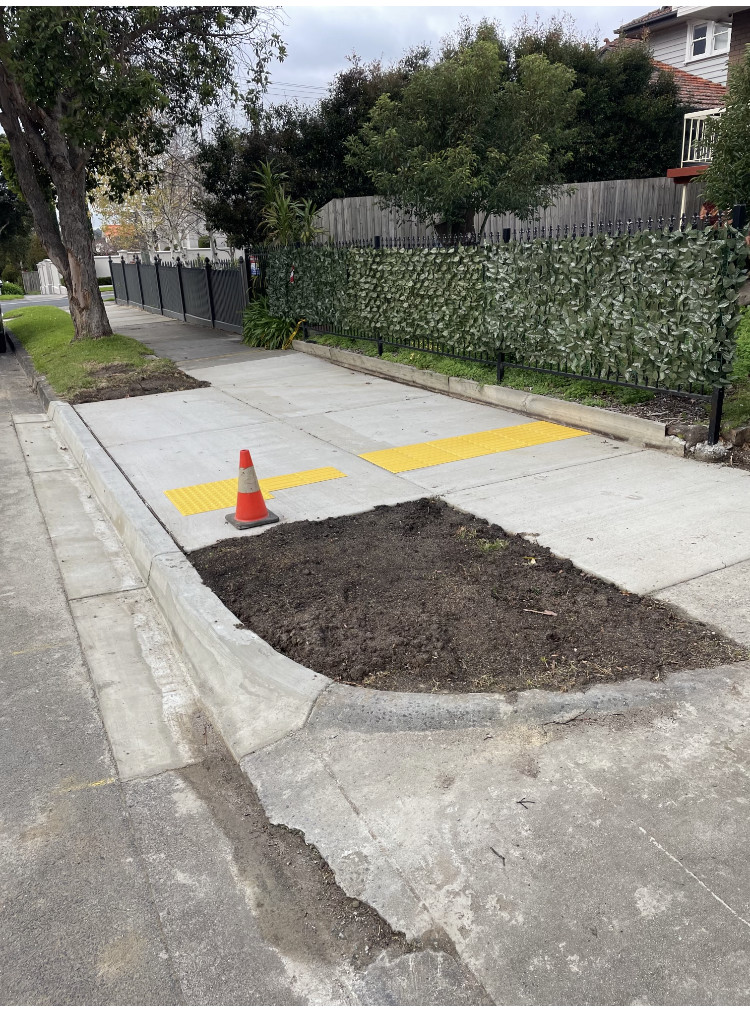
114, Kilby Road, Kew East
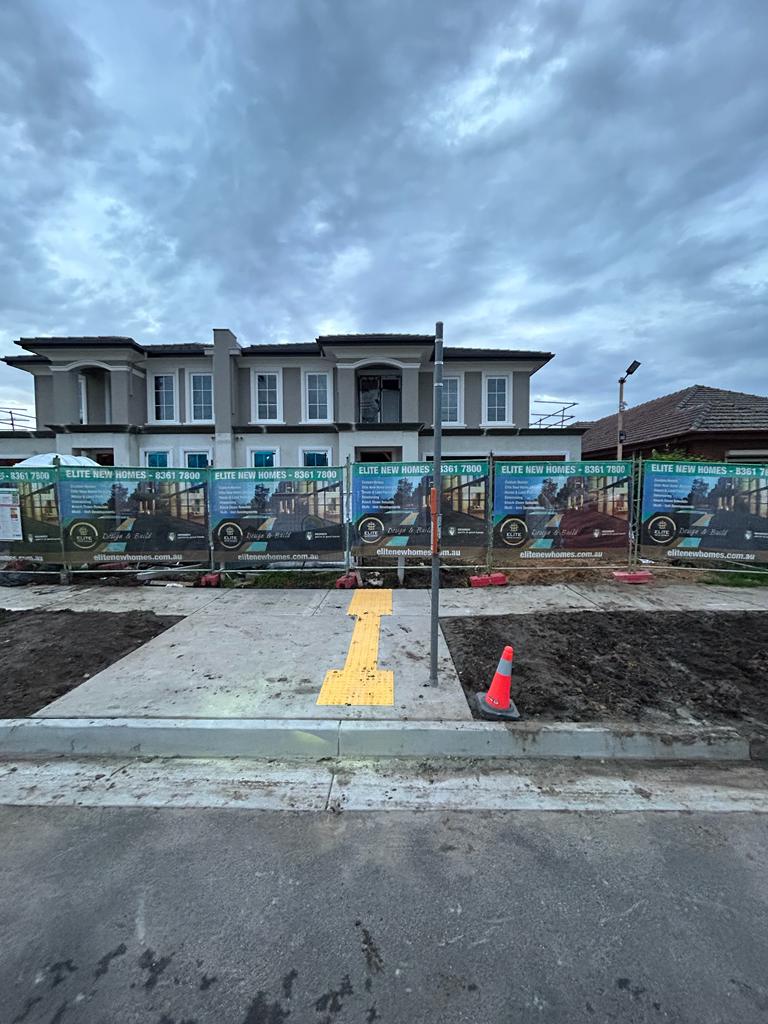
49, Hertford Road, Sunshine
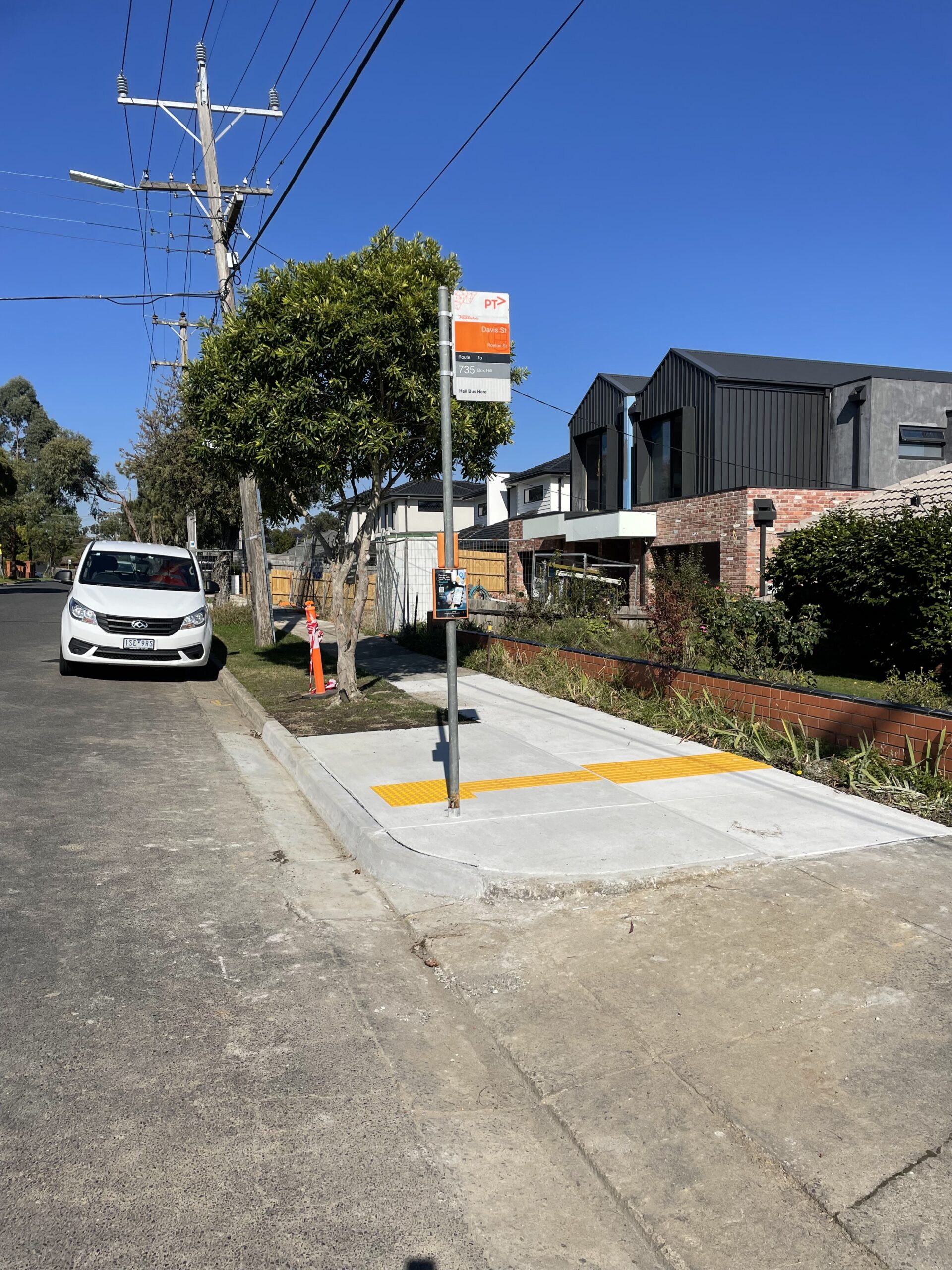
22 Royton St, Burwood East
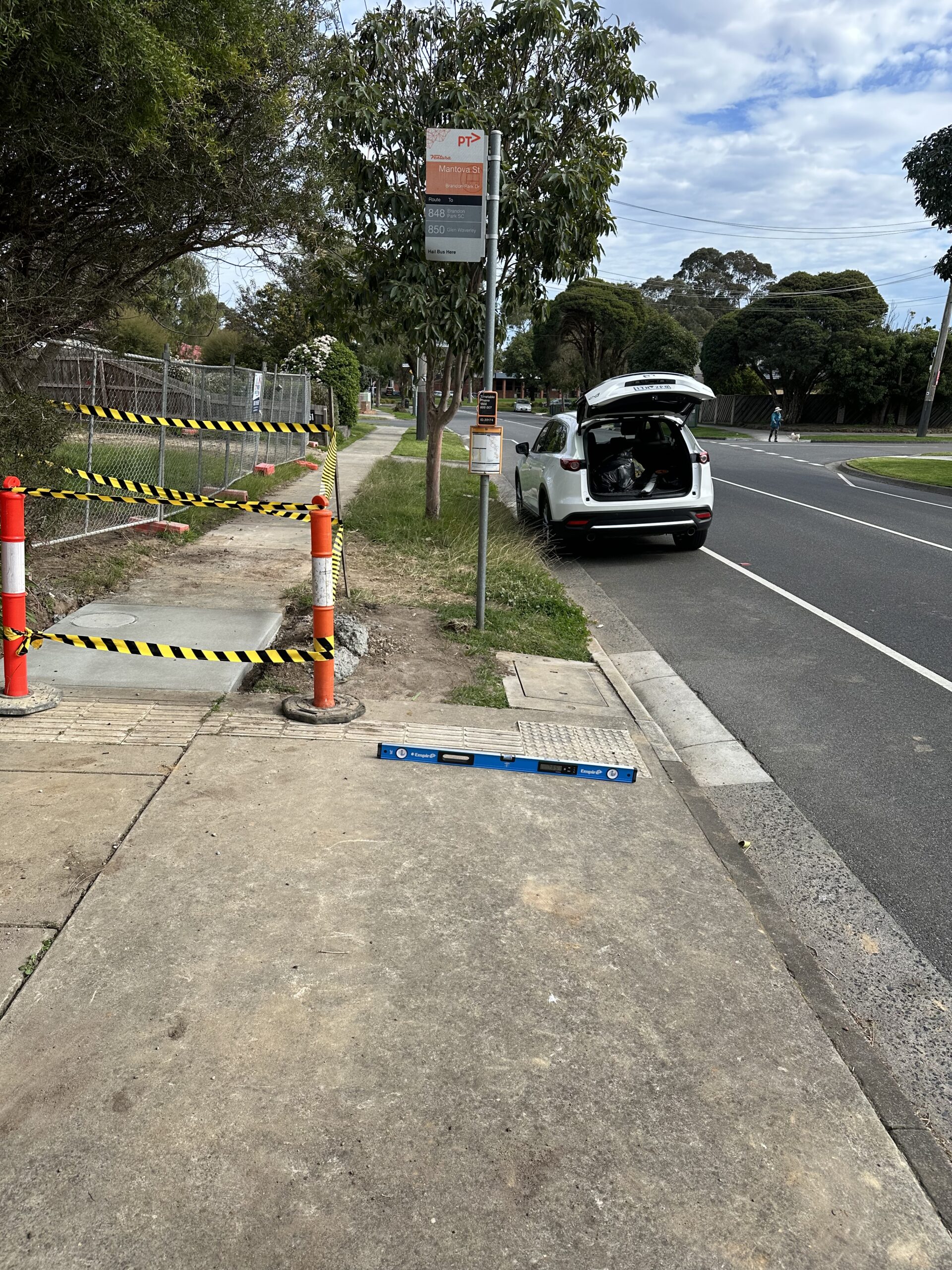
Wheelers Hill, Bus stop relocation
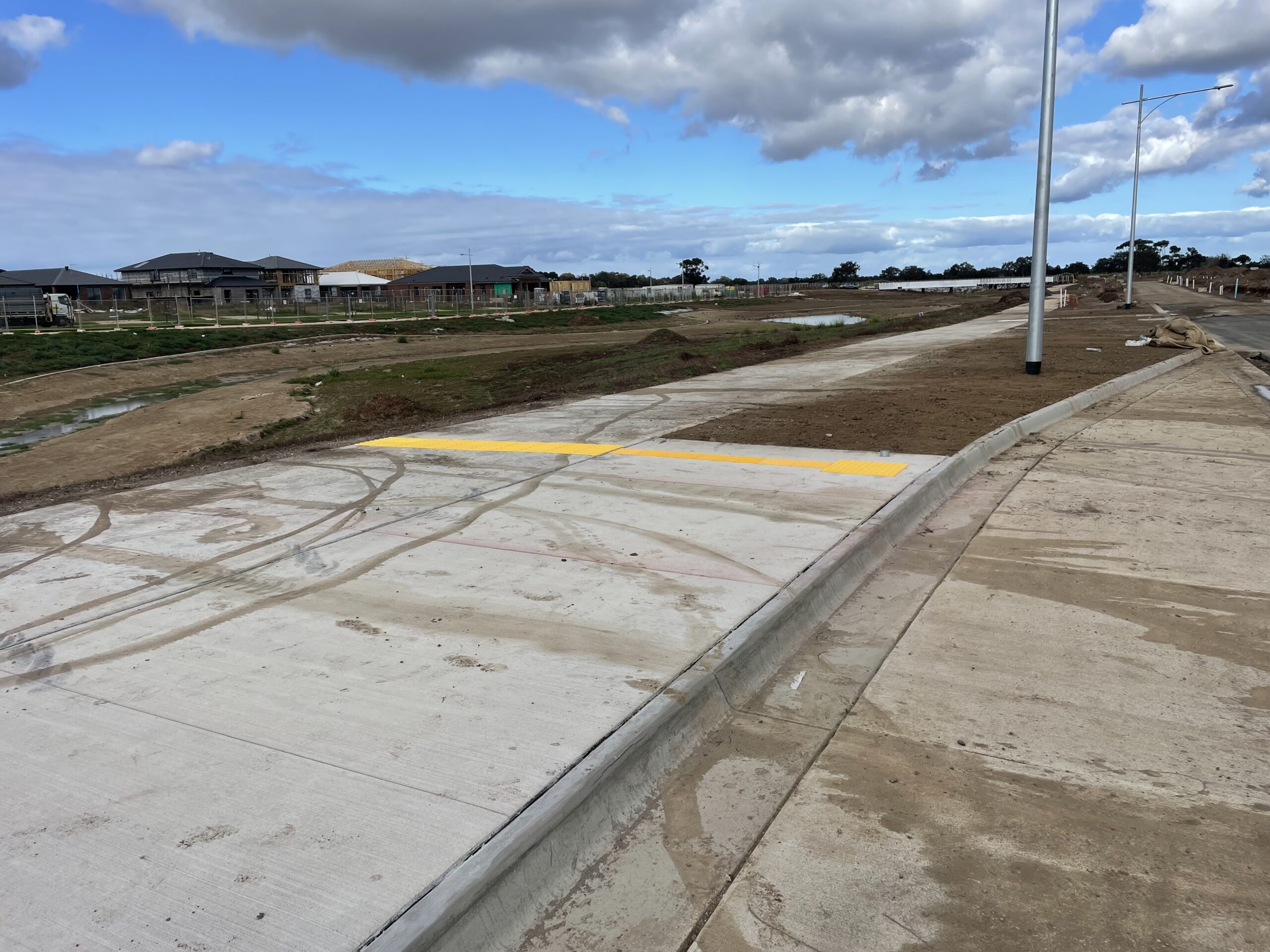
Grove Stage 7

1076 Centre Rd, Oakleigh South

75-79 Henry Street Greensborough

5 The Grange, Templestowe

Larman Street, Bentleigh East

290 Maribyrnong Rd, Moonee Ponds

307-313 Maribyrnong Road, Ascot Vale

Mambourin Stage 30

303 Maribyrnong Rd, Ascot Vale
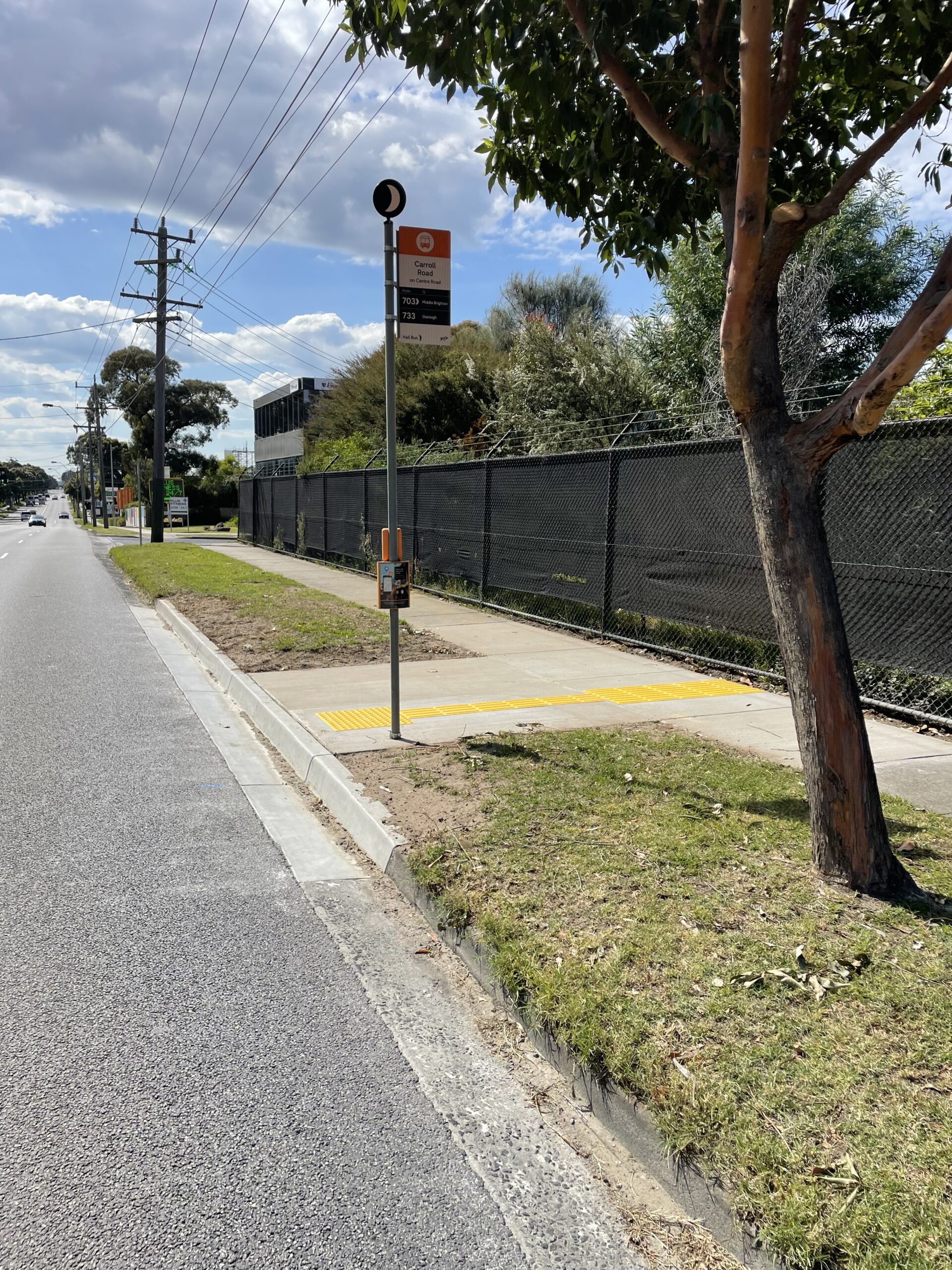
1076 Centre Rd, Oakleigh
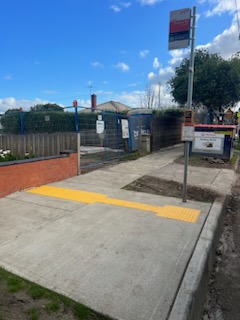
287 Autumn Street, Manifold Height
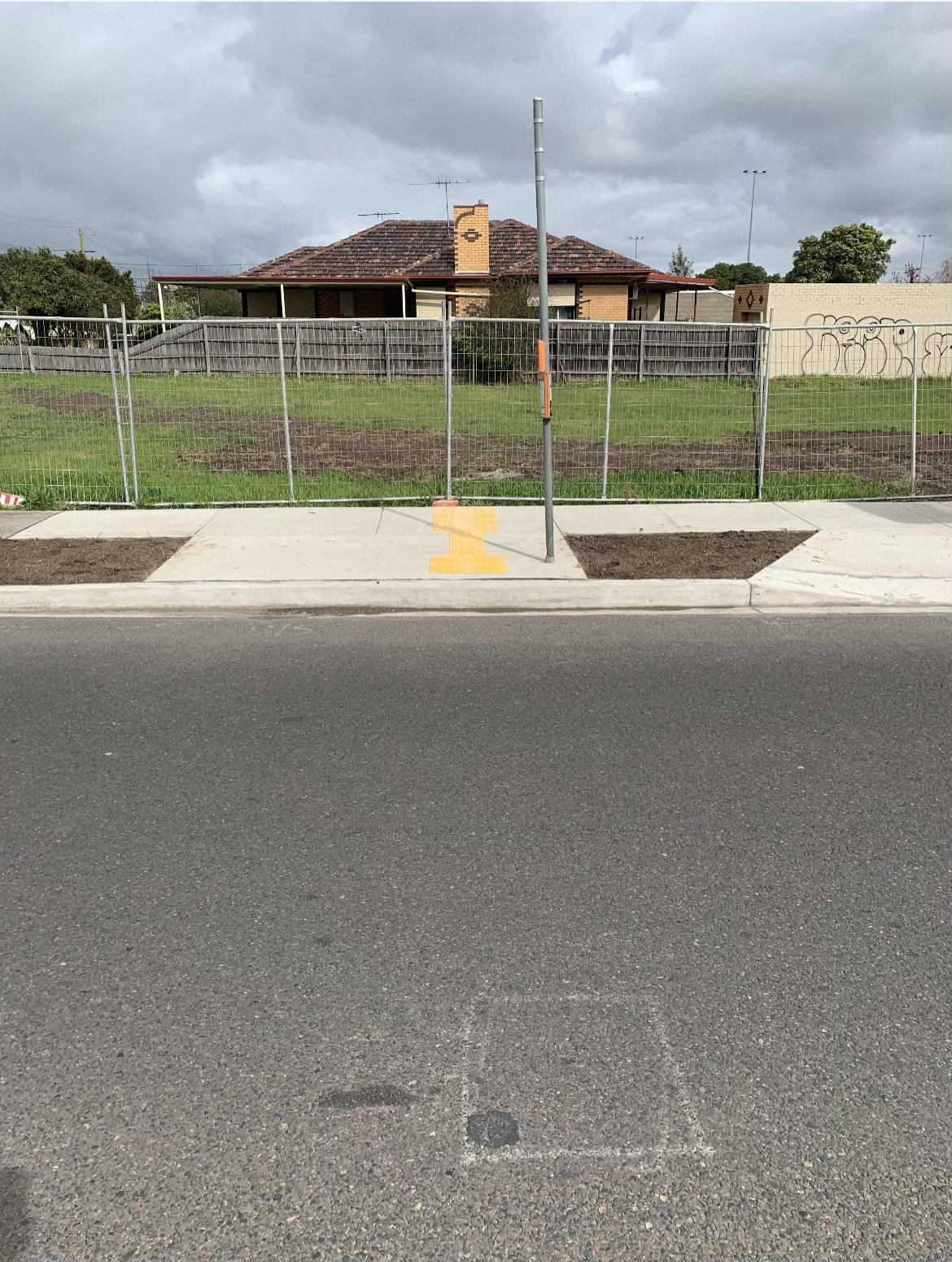
63 Ardoyne St Sunshine
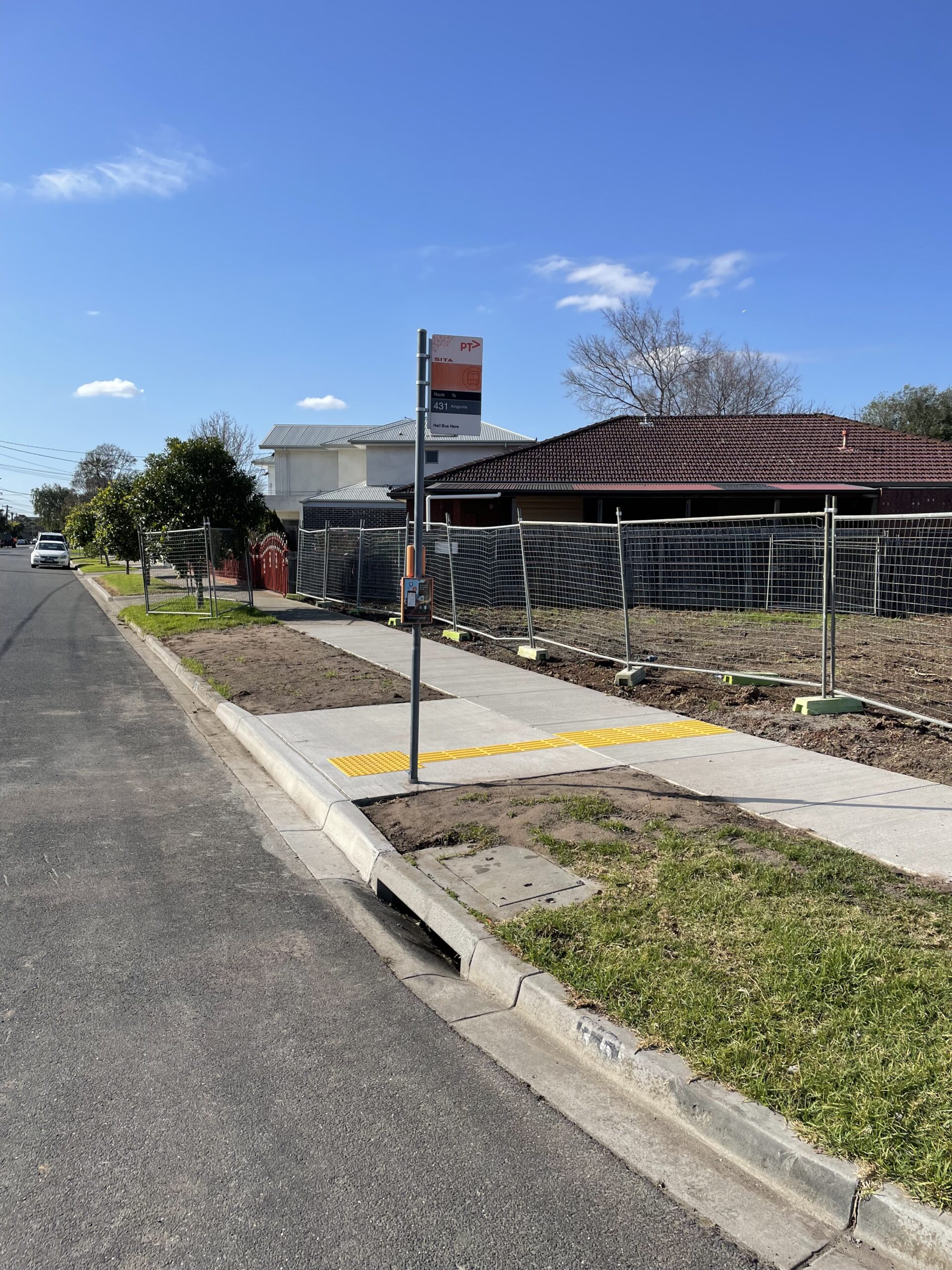
35 Kidman St, Yarraville
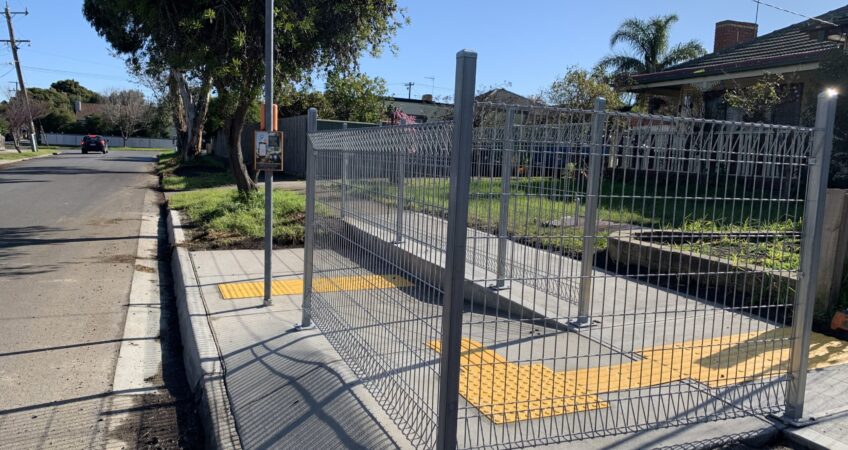
142 Evell St Glen Roy Bus stop
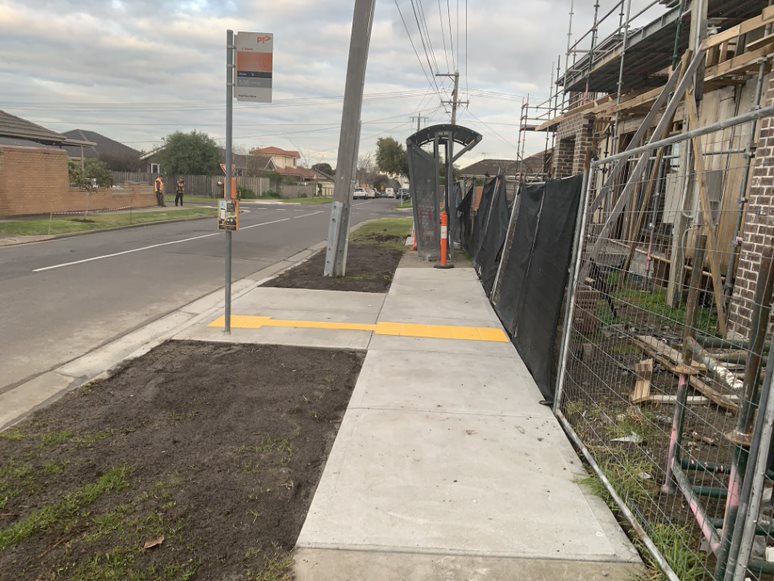
29 Sadie St, Glen Roy