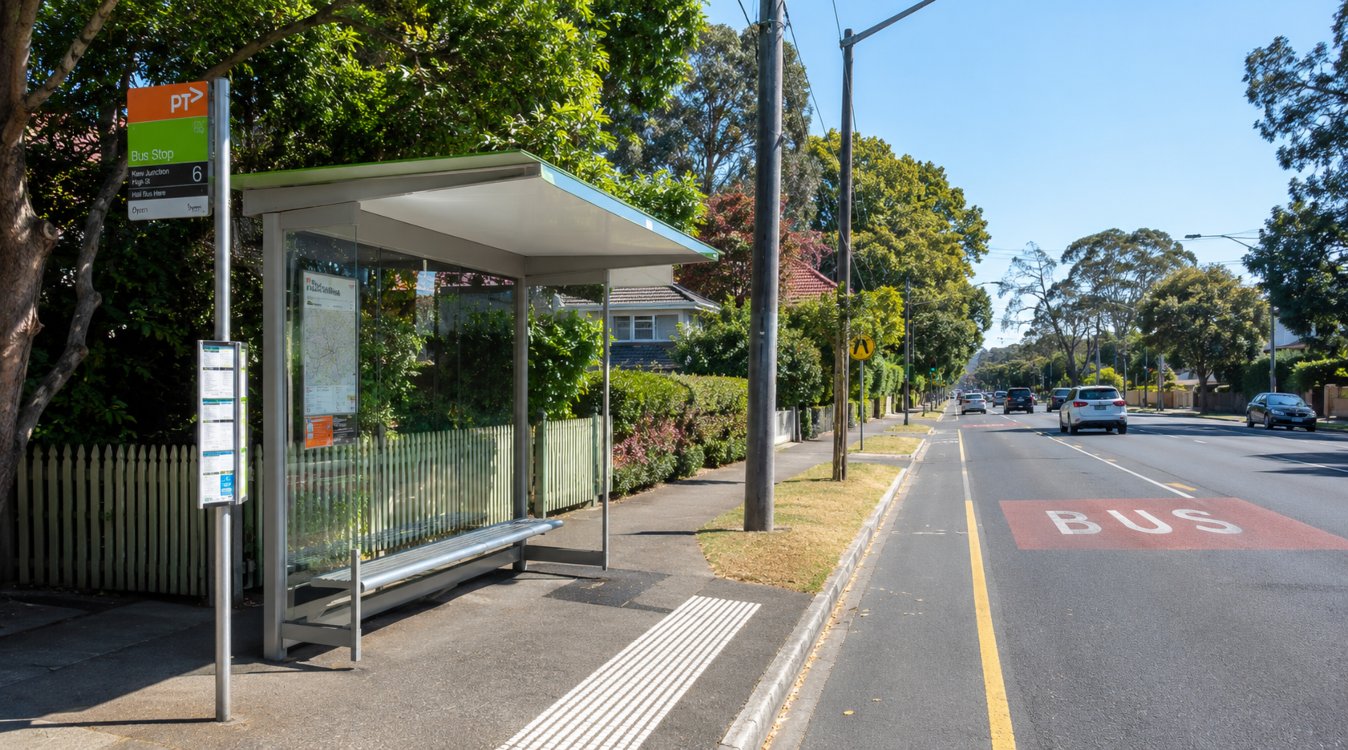
Introduction: Building the Backbone of Public Transport
Melbourne is one of Australia’s most dynamic and rapidly growing cities, with a public transport network that serves millions of commuters every single day. At the heart of this network lies a fundamental yet often overlooked piece of infrastructure — the humble bus stop. Far from being a simple pole and a bench, a modern bus stop in Melbourne is a carefully engineered structure that must meet a wide range of technical, safety, accessibility, and environmental standards.
Whether you are a local council, a property developer, or a government agency looking to commission bus stop construction in Melbourne, understanding the regulatory landscape is absolutely essential. Equally important is partnering with an experienced civil construction company in Melbourne that knows these requirements inside and out and can deliver compliant, high-quality outcomes on time and within budget.
In this article, we break down the key requirements for bus stop construction in Melbourne and explain why working with the right civil contractor in Melbourne makes all the difference.
1. Regulatory Framework Governing Bus Stop Construction in Melbourne
Before a single shovel hits the ground, bus stop construction in Melbourne must operate within a clearly defined regulatory framework. Several government bodies and standards come into play:
- Public Transport Victoria (PTV): PTV is the principal authority overseeing public transport infrastructure in Victoria. All bus stop designs must align with PTV’s Infrastructure Design Standards, which prescribe specifications for shelters, signage, kerbs, and passenger amenities. These standards ensure a consistent and recognisable experience across the entire network.
- VicRoads / Department of Transport and Planning: Since bus stops exist within or adjacent to road reserves, compliance with road design guidelines is mandatory. This includes requirements related to sight lines, traffic management during construction, and integration with existing road infrastructure.
- Australian Standards (AS): Several Australian Standards apply to bus stop construction, including AS 1428 (Design for Access and Mobility), which governs accessibility requirements, and AS 2890 (Parking Facilities), which may be relevant where bus bays or pull-in zones are involved.
- Building Regulations Victoria: Depending on the complexity and scale of the structure — particularly if a fully enclosed shelter is involved — planning permits or building permits may be required under the Building Act 1993.
A reputable civil construction company in Melbourne will be fully conversant with this regulatory ecosystem, ensuring your project avoids costly compliance failures or delays.
2. Site Selection and Planning Requirements
Before construction begins, thorough site assessment and planning is required. A competent civil contractor in Melbourne will assess several critical factors at the proposed location:
- Pedestrian footfall and accessibility: The site must support safe pedestrian access from surrounding streets and footpaths. This involves reviewing existing footpath widths, nearby intersections, and the distance from key destinations such as schools, hospitals, and shopping precincts.
- Road geometry and vehicle safety: The stop must be positioned so that buses can safely pull in and depart without creating hazards for other road users. Adequate sight distances must be maintained for both bus drivers and pedestrians.
- Drainage and stormwater management: Poor drainage can make bus stops hazardous and uncomfortable. Site planning must include an assessment of natural drainage patterns, with appropriate measures designed to prevent surface water pooling.
- Underground services: Before any excavation, all underground services — including gas, water, electricity, and telecommunications — must be identified and mapped to prevent dangerous and costly service strikes during construction.
- Environmental considerations: If the site is near environmentally sensitive areas, additional planning requirements under the Environment Protection Act 2017 may apply, including the need for erosion and sediment control plans.
3. Accessibility: A Non-Negotiable Requirement
One of the most critical aspects of bus stop construction anywhere in Australia — and particularly in Melbourne — is accessibility. Under the Disability Discrimination Act 1992 (DDA) and the Disability Standards for Accessible Public Transport 2002, bus stops must be designed and constructed to be usable by people with disabilities.
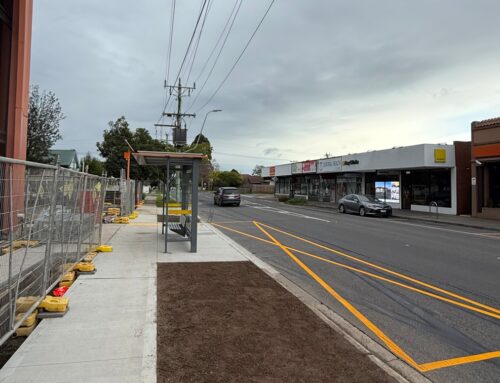
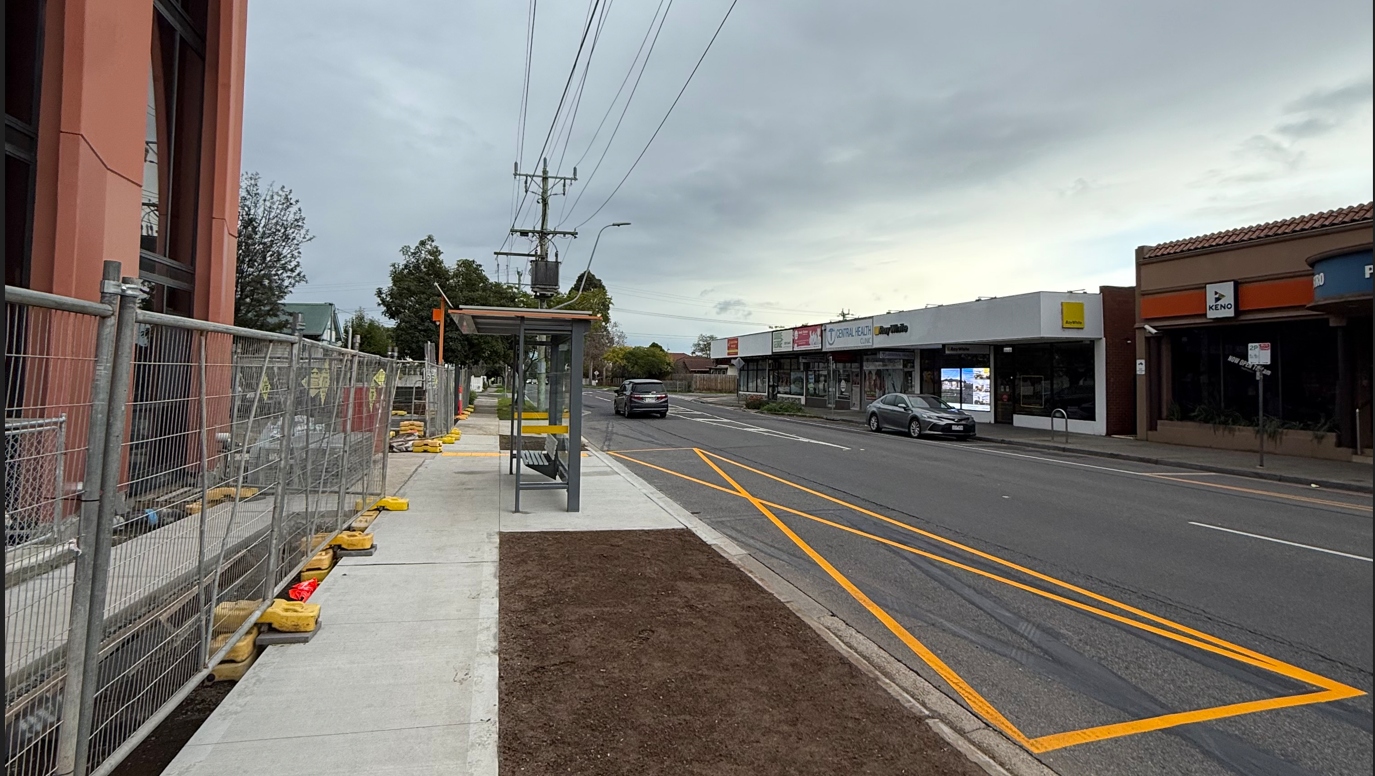
- Raised kerb boarding platforms: Bus stops in Melbourne are typically required to include a raised kerb to allow level or near-level boarding for passengers using wheelchairs, mobility scooters, or prams. The kerb height must align precisely with the floor height of accessible low-floor buses.
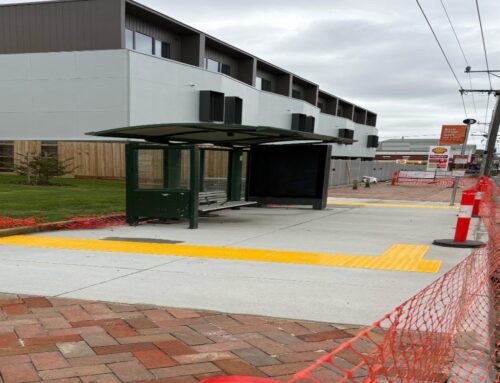
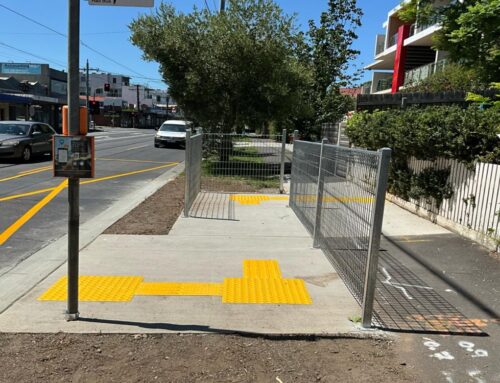
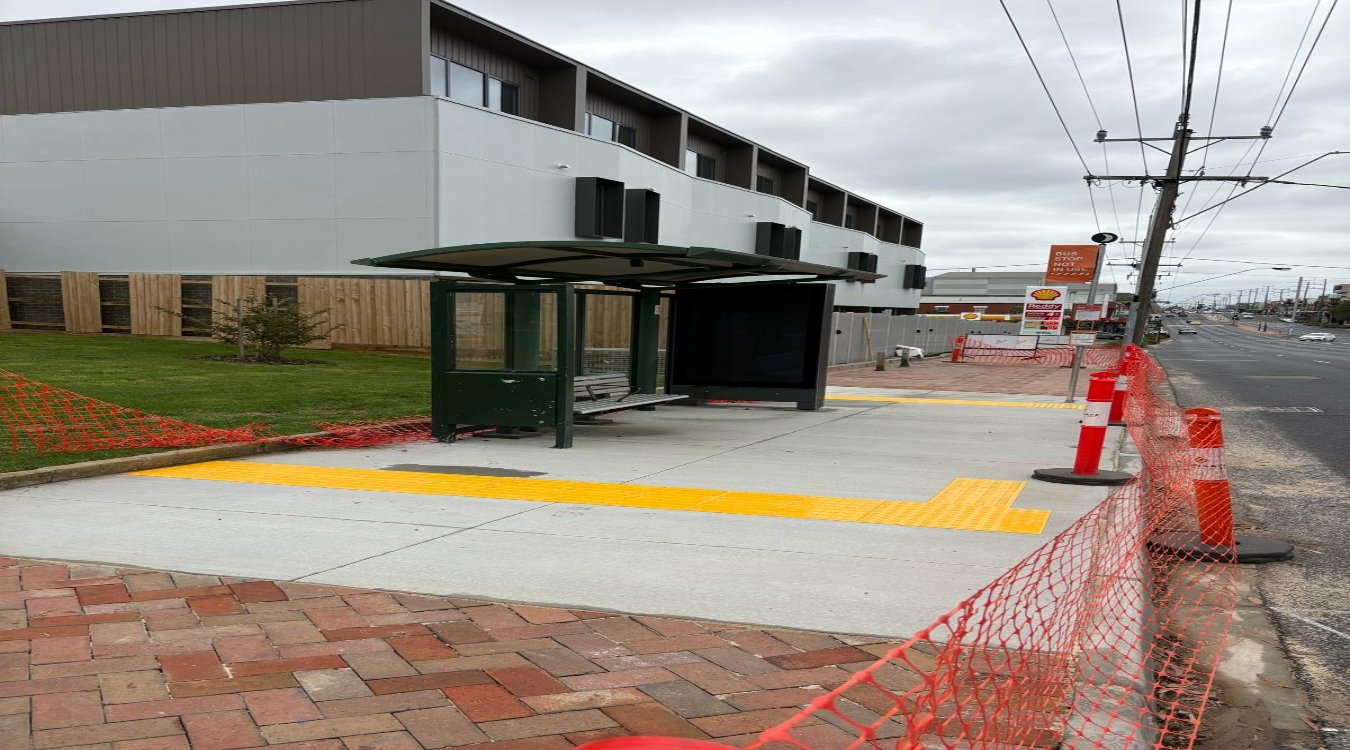
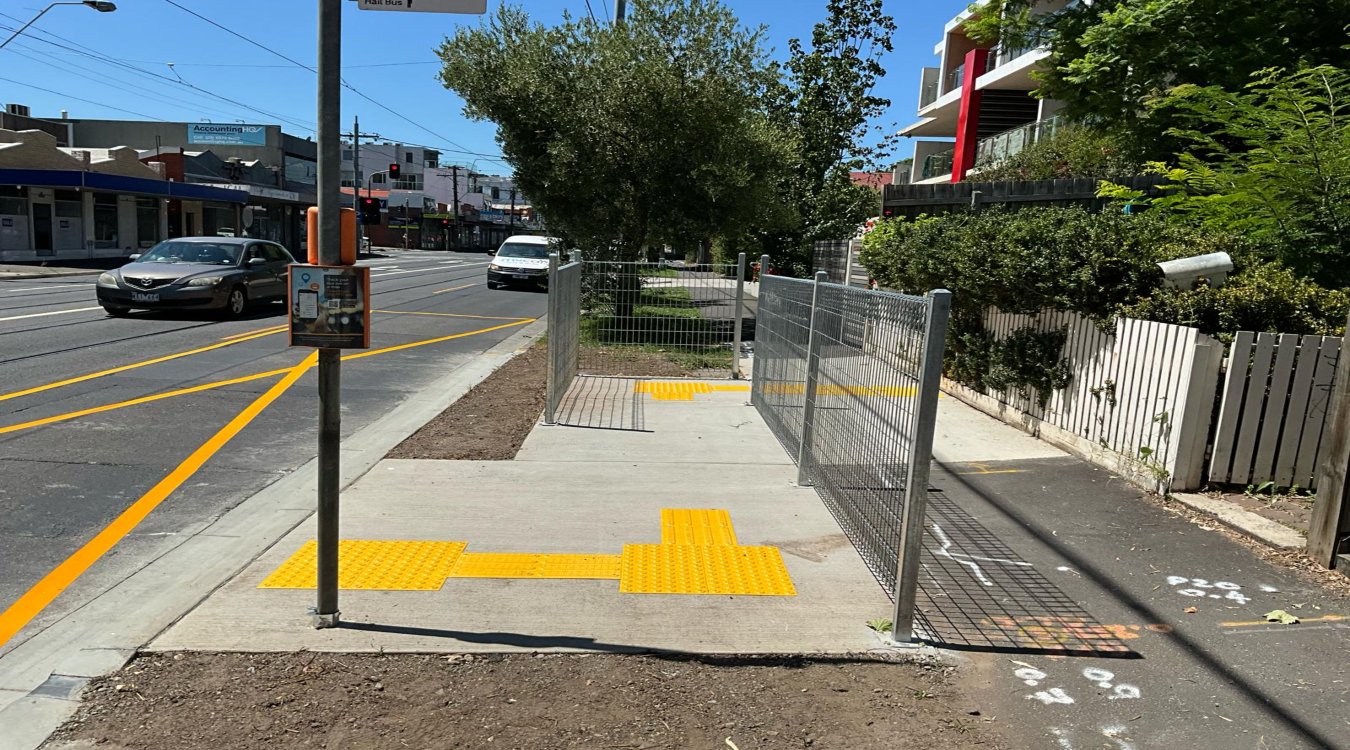
- Tactile ground surface indicators (TGSIs): These are standardised textured pavement tiles that guide vision-impaired passengers safely to the boarding area. Their placement, colour contrast, and dimensions must comply with AS 1428.4.1.
- Clear path of travel: There must be an unobstructed pathway of at least 1500mm (1.5 metres) width connecting the bus stop to the surrounding footpath network, free from poles, bins, or other street furniture that could impede mobility aid users.
- Seating with armrests and clear space: Where seating is provided, at least one seat with armrests must be available, and clear space must be maintained adjacent to seating to accommodate wheelchair users comfortably.
These accessibility requirements are not optional extras — they are legally mandated, and non-compliance can expose councils and project owners to significant legal and financial risk.

4. Structural and Construction Standards
The physical construction of a bus stop must meet robust structural standards to ensure durability, safety, and longevity in Melbourne’s variable climate conditions. Key construction requirements include:
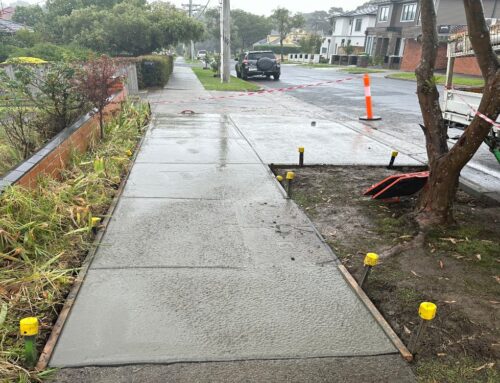
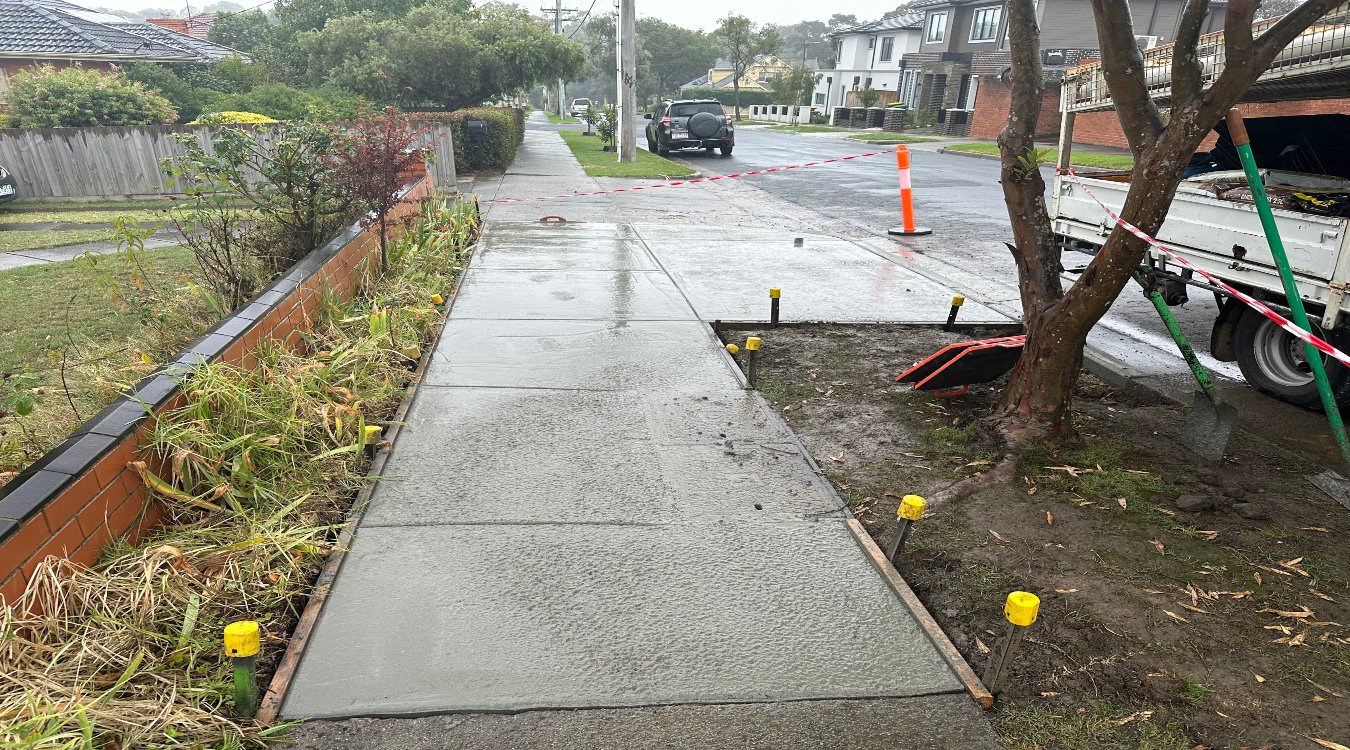
- Concrete works and civil infrastructure: The boarding platform, footpath connections, and surrounding pavement must be constructed using appropriate concrete mixes that comply with Australian Concrete Standards. Concrete thickness, reinforcement, and curing processes must be specified by a qualified engineer.
- Shelter installation: Where a passenger shelter is included, the structure must be built to handle strong wind forces, live loads, and impact forces as defined under the National Construction Code (NCC). Shelters must be securely anchored to concrete footings, with engineering certification provided upon completion.
- Drainage and stormwater infrastructure: Pit and pipe drainage, or surface grading with appropriate outlets, must ensure that water does not pond on the boarding platform or adjacent footpath, reducing slip hazards and maintaining asset longevity.
- Signage and lighting: Bus stop signage must conform to PTV’s branding and legibility standards. Adequate lighting must be provided to ensure safety for passengers during evening and early morning hours, and luminaire selection must comply with relevant Australian Standards for public space lighting.
- Line marking and road markings: Yellow kerb markings indicating the bus zone, as well as any associated no parking zones, must be applied in accordance with VicRoads specifications.
5. Traffic Management During Construction
Bus stop construction in Melbourne does not happen in a vacuum — it takes place within active road and footpath environments where ongoing traffic management is essential. Requirements include:
- Traffic Management Plan (TMP): A site-specific TMP must be prepared and approved prior to works commencing. This plan details how pedestrian and vehicle traffic will be safely managed around the construction zone, including detour routes, temporary barriers, and signage.
- Qualified Traffic Controllers: Where works affect live traffic lanes, qualified and certified traffic controllers must be engaged. In Melbourne, these personnel must hold a current Traffic Management accreditation in line with VicRoads requirements.
- Minimal disruption to bus services: Construction scheduling must be coordinated with PTV and the relevant bus operator to minimise disruption to existing services. This may require works to be staged or conducted outside of peak service hours.
Why Choosing the Right Civil Contractor in Melbourne Matters
Navigating the complex web of standards, permits, and technical requirements for bus stop construction is not a task for the inexperienced. Partnering with a proven civil construction company in Melbourne brings enormous advantages:
- End-to-end project management: From site assessment and design coordination through to construction, certification, and defect liability management, an experienced civil contractor manages every stage with precision and accountability.
- Established relationships with authorities: Reputable civil contractors in Melbourne maintain working relationships with PTV, local councils, and VicRoads, facilitating smoother approvals and faster resolution of any on-site issues.
- Technical expertise and quality assurance: A skilled civil construction team ensures that all concrete works, drainage, accessibility features, and structural elements are delivered to the highest standard, minimising the risk of defects and costly rework.
- Safety-first culture: Civil construction in road environments carries inherent risks. A professional contractor will have a strong health and safety system in place, protecting workers, the public, and your project from incidents and liability.
Conclusion: Build It Right From the Start
Bus stop construction in Melbourne is a technically demanding and highly regulated field. Meeting the requirements set by PTV, VicRoads, the DDA, and Australian Standards demands expertise, experience, and meticulous attention to detail. From accessible boarding platforms and tactile indicators to engineered shelters and compliant drainage systems, every element must be delivered to an exacting standard.
If your organisation is planning bus stop construction or broader public transport infrastructure works, investing in the right civil contractor in Melbourne is the single most important decision you will make. A trusted civil construction company in Melbourne will not only ensure full compliance with all applicable requirements but will also deliver a finished product that serves your community safely and reliably for decades to come.